Tan Wan Sze, Laura Kee discuss international collaboration, artist sustainability in Korea explored as part of Creative Connection: A Korea-Singapore Exchange Project
Seoul Foundation for Arts and Culture and Singapore’s Arts House Group signed a three-year memorandum of understanding in May to facilitate artistic collaborations and exchanges between artists and arts professionals from the two countries.
The agreement, which includes institutional partnerships and capability development through residencies and arts venue management exchanges, was the latest in a string of cultural exchanges between Korea and Singapore that have been taking place at different levels.
In 2023, Korea Arts Management Service and National Arts Council of Singapore signed amemorandum to promote exchanges in the convergence of art technology as well as further collaborations and exchanges between arts professionals of the two countries.
Marking the 50th anniversary of diplomatic relations between Korea and Singapore last year was the launch of "Creative Connection: A Korea-Singapore Exchange Project."
The collaborative initiative between the Korean Foundation for International Cultural Exchange and the National Arts Council Singapore aimed to establish a foundation for sustained international cultural exchange.
The program, which ran from October to February, saw four arts professionals from each country doing research on their counterpart countries, including research trips.
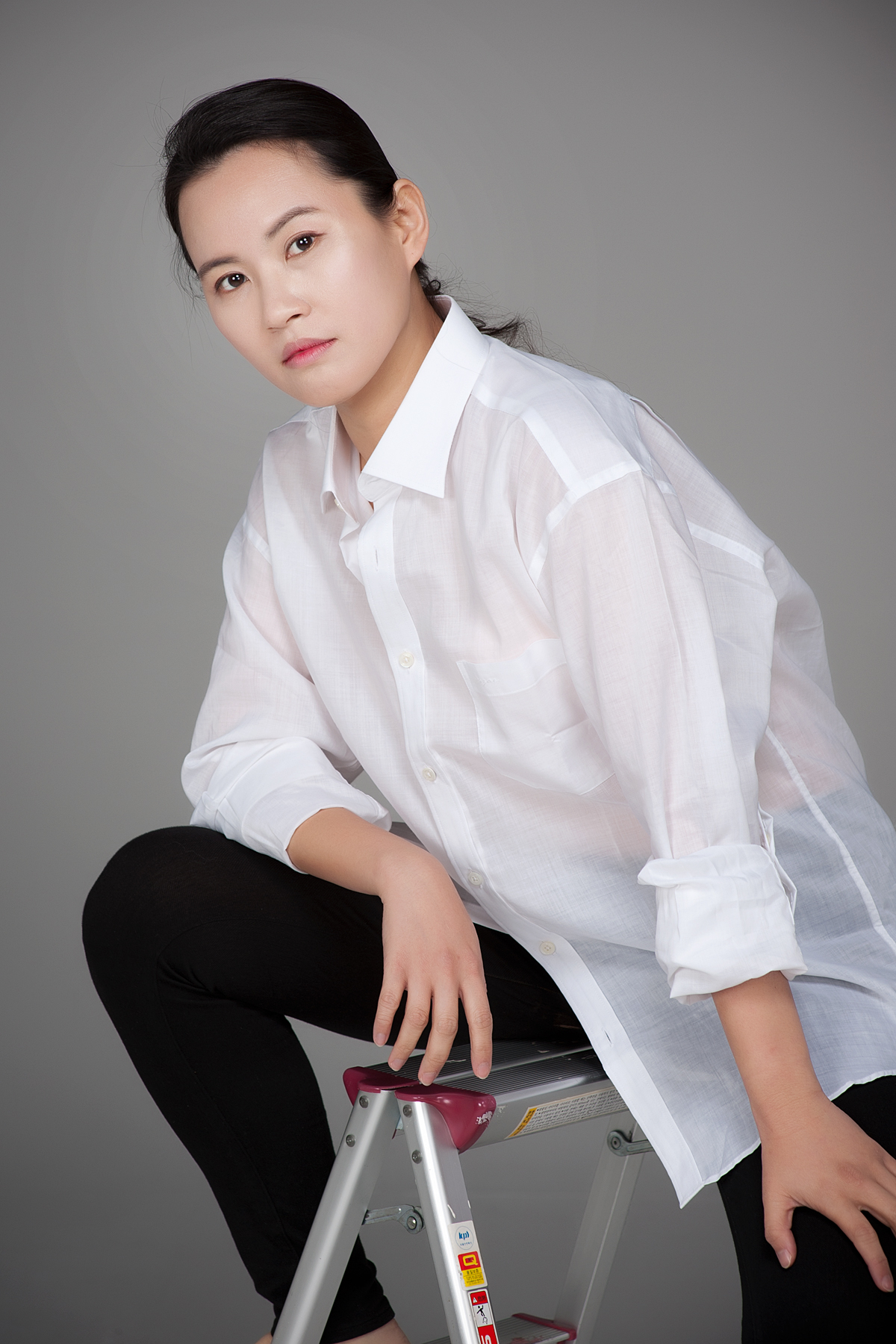
Tan Wan Sze, a Singaporean theater actor and creative producer, brought a unique perspective to Creative Connection as a student at Korea National University of Arts pursuing master of arts degree in acting. She enrolled in the prestigious program in 2018.
Active in both Singapore and Korea, Tan made her Korean theater debut in 2021 with the Seoul Metropolitan Theater’s “Ten Million Cities” and has since appeared on several Korea stages as well as TV dramas and films, including “Ajoomma,” a 2022 Singaporean-Korean film, among others.
Tan is also the creative producer of the theater collective The Wanderers, active in collaboration between Singaporean and Korean performing arts sectors.
Her role as a bridge between Singapore and Korea stood out at this year’s Singapore International Festival of Arts.
Tan, who is fluent in Korean, served as an interpreter for the international collaborative project “Last Rites,” a cross-cultural and cross-disciplinary production directed by Liu Xiaoyi in which five veteran actors from Asian countries, including actor Jung Dong-hwan and mime artist Nam Geung-ho of Korea, explore themes of endings and legacy.
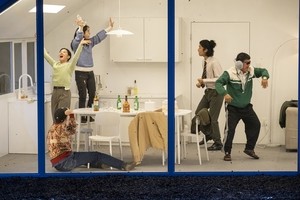
Tan also took to the stage in a Singaporean-Korean production that premiered at SIFA. “We Live Here,” an interactive movement and dance work, featured Laban movement analysis instructor and actor Lee Ho-young from Korea and Li Xie, a Singaporean biomechanics expert.
Her research for Creative Connection, titled “Cracking the Korean Code in a Trans-Asian Performing Arts Frontier,” outlines challenges that foreign artists face in accessing the Korean market and offers practical tips.
“Being a foreign student, a foreign actor in Korea, I was very interested to know how we could better assimilate, adapt to the environment and how we can have further international collaborations,” Tan said in an interview with The Korea Herald between sessions of the International Society for the Performing Arts 2026 Singapore Congress in May. Over 400 performing arts leaders from more than 40 countries participated in the event.
Hailing from Singapore, where there are diverse cultures and international collaborations are common, she was interested in pursuing international collaboration, bringing artists from Singapore to Korea, Tan explained.
She also looked into what supports were available in Korea for such collaborations.
“It was during this research process that I realized that under the Ministry of Culture, Sports and Tourism, there are so many, many, many organizations,” she said. With many of the support programs overlapping, finding the right one can be a challenge, she observed.
Conducting a focus group with foreign performers in Korea to discuss working and collaborating in Korea, she realized that not having Korean citizenship, despite often holding a residency visa, precluded them from applying to many of the support programs.
“At the same time, we pay a 23 percent tax. ‘So, can we have some form of support?’ was our question,” Tan said.
When she brought up the issue in interviewing policymakers, she was advised to form an organization and have it registered, which might facilitate dealing with foundations (that offer support programs).
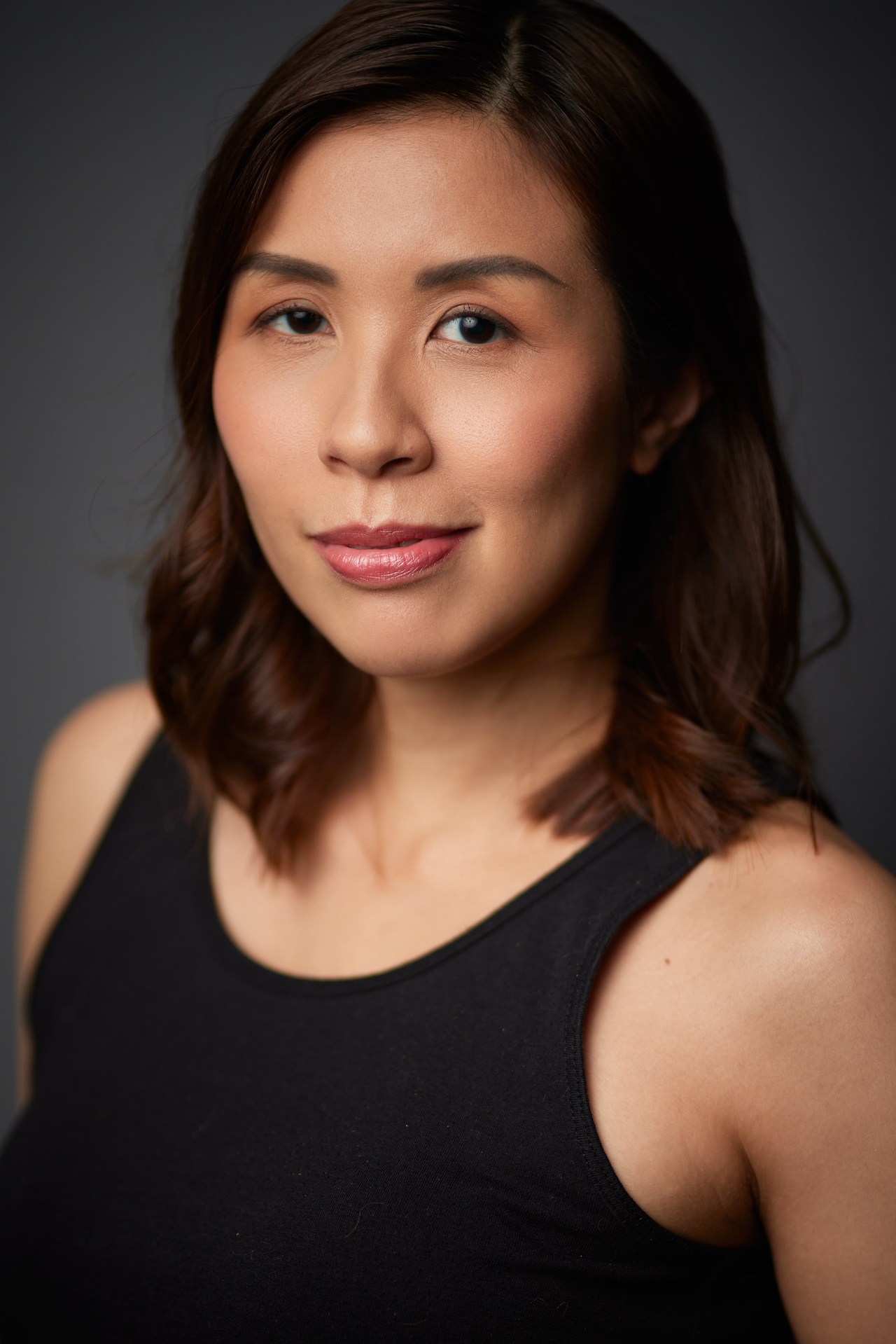
The Artist Get Ready Grant from the Korean Artist Welfare Foundation is one source of support open to foreign arts professionals, according to Laura Kee, a Singaporean actor, emcee and voiceover artist.
“It offers 3 million won ($2,170) to 20,000 artists throughout Korea,” said Kee.
To be eligible for the grant, one needs to provide verification of artistic activity, Kee explained. Source of income and past projects may be considered in the verification. The Korean Artist Welfare Foundation has verified 200,000 cases of artistic activities as of October 2025.
Participating in the Culture Connection project, she produced a research study titled “Bridging the Gap: Artist Sustainability and International Collaboration in South Korea’s Performing Arts Infrastructure.”
Her research looked specifically into how Korean Artist Foundation supports people in-between projects.
“They recognize that artists only get money when they are doing their productions,” said Kee who volunteers with The Actors’ Society, advocating for the welfare and professional sustainability of actors in Singapore.
As an arts researcher, she focuses on creative labor and artist sustainability, aiming to contribute to cultural policies that improve the working conditions of people in the performing arts.
“I wanted to learn how performing artists sustained themselves in South Korea,” said Kee.
She found many support structures interesting.
“Venue support is the main thing in Korea that you don’t have much of in Singapore. At Arko Arts Theater, when you have a jury show or a commissioned show, you can use the Grand Theater for 1 million won, no matter how many shows you have. But you must be selected,” said Kee. “This is unheard of in Singapore.”
Korean Artist Welfare Foundation, based on the Artist Welfare Act passed in 2011, provides artists with several different grants, including the Get Ready Grant, access to counseling and legal advice, Kee explained.
Another very useful support she discovered in Korea that Singapore does not have is the Artist Pass.
“If you are a verified artist, you can get an Artist Pass that allows you to get discounts or free admissions to exhibitions, shows,” she said.
Kee noted the importance of statistics in drawing up government policies: Artistic activity verification by Korean Artist Welfare Foundation is crucial in this sense.
It was Kee’s interest in Korean culture — she has been studying Korean since 2015 — that led her to research Korea over countries such as the UK and the US that might have a more comprehensive artist support system.
“Korea is quite advanced. We look up to Korea’s advanced arts and soft power,” she said.
Noting that the two countries share many similar problems, she said, “I wanted to find out how Korea copes with them.”
Both Tan and Kee observed that the Korean audiences may not be interested in work from Southeast Asia.
While multicultural identity is a big theme in Singapore, for example, “it needs to be translated to the Korean audience,” Tan pointed out.
On the other hand, multicultural identity may be a strength that Singapore has not recognized and capitalized on Kee noted.
“Many of the Korean artists in the Creative Connection program actually explored a lot about identity how we present it in the theaters,” she said.